In my recent clinic consultation, I was guiding a lady to improve her metabolic health to address her neurological condition.
She expressed frustration about her inability to “lose weight” despite trying “everything”
First we discussed other health metrics beyond the number on the scale. We discovered subtle signs – brain fog, afternoon energy crashes, and trouble sleeping – all potential clues pointing to insulin resistance.
What surprised her most? She didn’t have diabetes, wasn’t overweight by BMI standards, and her routine blood tests were “normal.”
Yet her body was struggling with metabolic health under the surface.
In my neurology practice, I frequently see patients whose neurological symptoms are driven by underlying metabolic dysfunction.
From migraines and cognitive issues to nerve damage and sleep disorders – insulin resistance often reveals itself through neurological presentations long before diabetes is diagnosed.
This unique clinical perspective allows me to spot these connections early and guide patients toward effective lifestyle interventions.
Did you know? Insulin resistance often develops silently for years before standard tests catch it.
By then, it may have already started affecting your brain health.
A simple tool you can use, is the waist-to-height ratio – keeping your waist circumference less than half your height is associated with better metabolic health.
This measurement often catches metabolic issues before standard tests do.
We worked on targeted lifestyle changes, and although initially skeptical, she was delighted with the results, sharing: “This is the most energized I’ve felt in years!”
📍How does metabolic health affect your brain?
Your brain is incredibly sensitive to metabolic changes, with insulin resistance potentially leading to reduced brain energy, compromised blood-brain barrier function, and increased inflammation – all of which can manifest as brain fog, mood changes, and cognitive challenges.
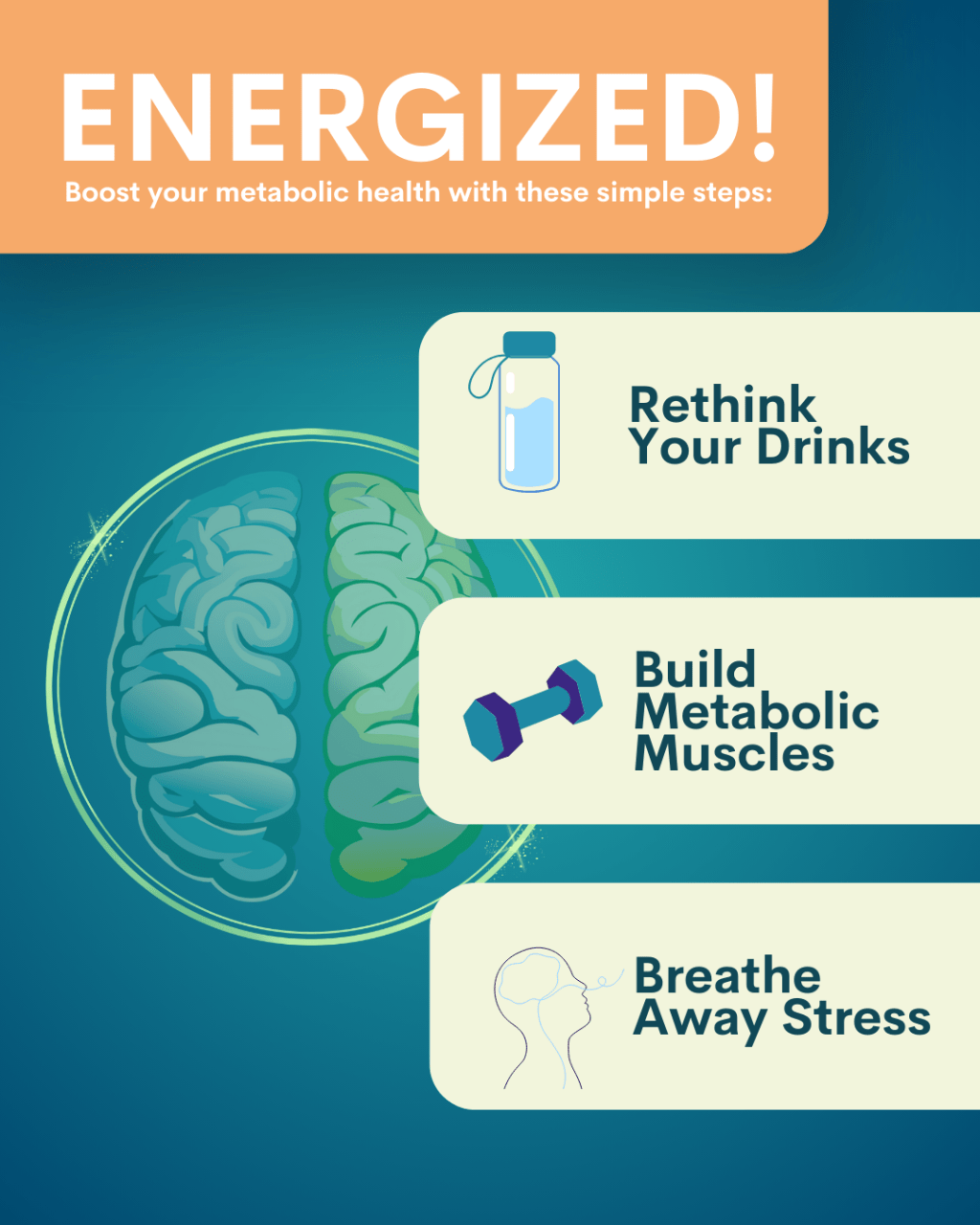
Here are 3 practical tips that can make a difference:
🌟1️⃣ Rethink Your Drinks
Even unsweetened or “diet” fizzy drinks can disrupt metabolic health by altering gut bacteria and triggering insulin release through artificial sweeteners.
One surprisingly effective change? Switching to filtered water.
Not a fan of plain water? Consider investing in a high-quality water filter (avoiding plastic bottles) and adding cucumber slices or fresh mint leaves for that luxury spa taste!
This simple change helps stabilize blood sugar levels and supports your brain’s hydration needs.
🌟2️⃣ Build Metabolic Muscles
Strength training creates a metabolic powerhouse effect for your brain.
Building lean muscle increases your metabolic rate and enhances insulin sensitivity, helping your cells respond more effectively to insulin signals.
Even two 20-minute sessions weekly can make a significant difference to your brain’s energy supply and cognitive function.
Start with bodyweight exercises or light weights – the key is consistency rather than intensity at first!
🌟3️⃣ Breathe Away Stress
Chronic stress drives insulin resistance through cortisol release, creating a challenging cycle for brain health.
Try this exhale-focused breathing technique:
Breathe in for a count of 4
Hold briefly
Exhale slowly for a count of 6-8
Hold briefly
Repeat for 2-3 minutes
Emphasizing the exhale activates your parasympathetic nervous system, reducing stress hormones that contribute to metabolic dysfunction and brain fog.
📍Question for you today
Which of these three approaches would you consider for this week?
Wishing you metabolic balance for brain vitality,
Dr Sui Wong
PS – Thank you to everyone who completed the survey on the BRA(i)NS® Method Masterclass! “Top of the pops” so far: Balancing Autonomic Nervous System. Look out for upcoming information about a Masterclass on this topic, where I’ll connect the dots between brain health, metabolic health, and your autonomic nervous system function. 🙂
PPS – Want to dive deeper into practical strategies for metabolic health? My book “Sweet Spot for Brain Health” explores this topic in detail, with implementable approaches for nutrition, time-restricted eating (without worsening stress or metabolic dysfunction), physical activity, and sleep optimization. Readers particularly appreciate how the book provides a balanced approach to fasting that supports metabolic health while respecting individual needs and stress levels.
 Dr Sui Wong Empowering Your Brain Health
Leave a comment