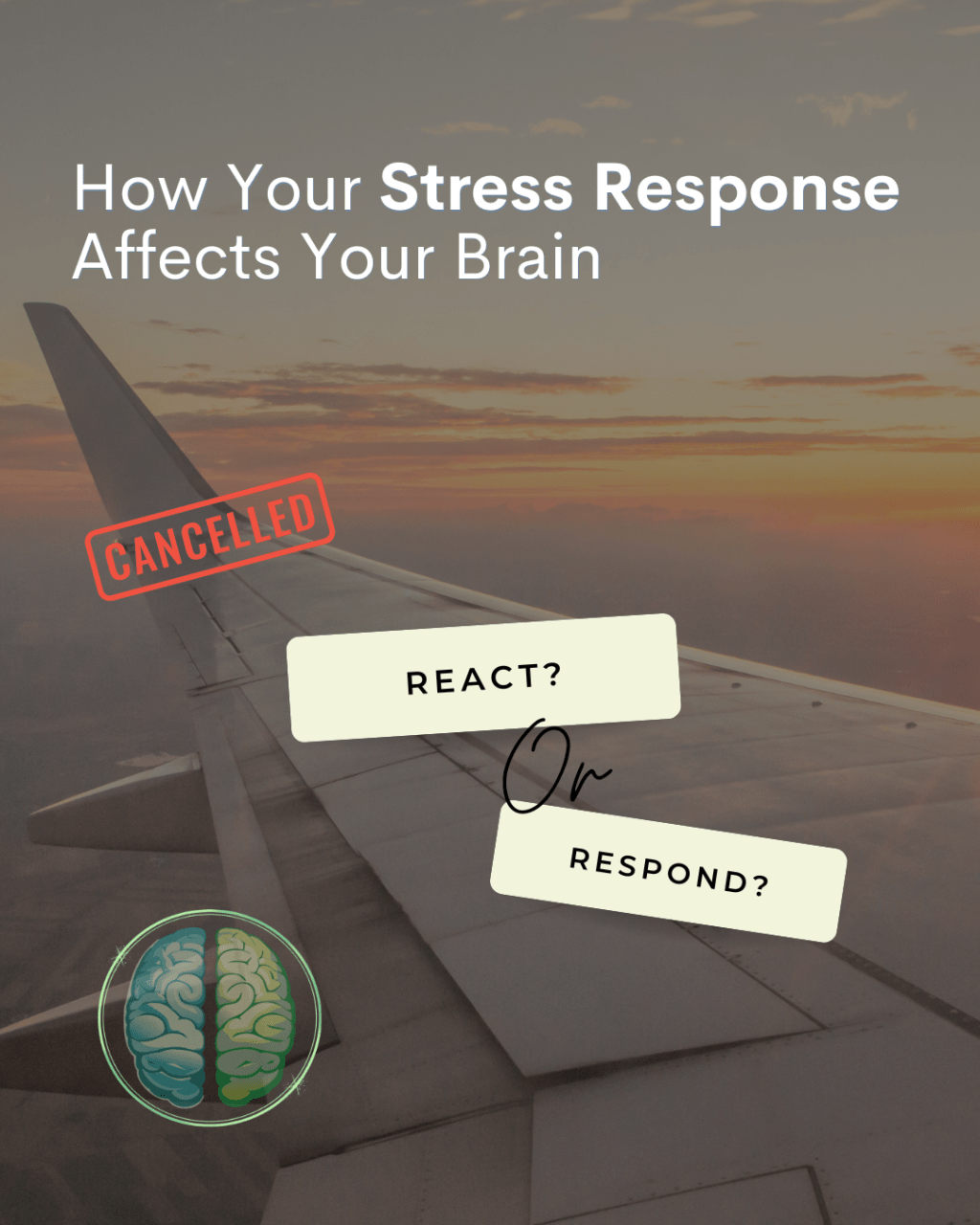
Last week, I mentioned being at the North American Neuro-Ophthalmology Society (NANOS) conference in Arizona.
What I didn’t plan for was the adventure getting home!
After the conference finished, I stayed an extra day to deliver the online mindfulness intervention for my research study participants. The next morning, I woke to alerts that Heathrow airport was shut down and all flights disrupted.
What did I do? I went ahead with my planned Zone 2 exercise (I know, right?! 🤣).
This wasn’t just about maintaining my routine – it was a deliberate choice to prepare my brain for the potentially stressful day ahead, keeping clarity of mind while dealing with uncertainty (what to pack if stranded without luggage, creating backup plans, etc.).
This experience reminded me of an important brain health principle: it’s not stress itself that’s harmful, but our response to stress.
📍How Your Stress Response Affects Your Brain
When faced with unexpected challenges, your brain has options – to react automatically or respond with intention.
Your automatic stress reactions can flood your brain with cortisol and adrenaline, which is helpful in true emergencies but can impair decision-making and clarity when sustained.
The good news? You can train your brain to prioritize what matters most, even during disruptions.
📍3 Tips for Brain-Healthy Stress Management
🌟1️⃣ Immediate Brain Benefits: Breath First, React Later
When unexpected news hits, take 3 deep, slow breaths before responding.
This simple pause activates your parasympathetic nervous system, giving your prefrontal cortex (your brain’s wise decision-maker) time to come online instead of letting your amygdala (your alarm system) take full control.
This creates space to prioritize what truly matters rather than getting caught in reactive patterns.
🌟2️⃣ Medium-Term Brain Benefits: Maintain Core Routines
Identify 1-2 non-negotiable brain-supporting habits that you protect even during disruption.
For me, that’s movement and mindfulness practices. For you, it might be different.
These anchor points provide stability for your brain’s regulatory systems during uncertainty, supporting clearer thinking and emotional balance.
Research shows that maintaining key routines during stress helps preserve cognitive function and working memory.
🌟3️⃣ Long-Term Brain Benefits: Practice Stress Flexiblity
Your brain becomes more resilient through regular exposure to manageable stress followed by recovery.
Think of these disruptions as “brain training” opportunities – each time you navigate a challenge while maintaining perspective, you’re strengthening neural pathways for future resilience.
This “stress flexibility” has been linked to healthier brain aging and protection against cognitive decline.
📍Question for you today
What’s one core routine you could protect during your next unexpected challenge?
Wishing you clarity when it matters most,
Dr Sui Wong
PS – I’m grateful for everyone who signed up to my recent ~ BRA(i)NS® Method Masterclass ~ From Stress to Strength: Balancing Your Nervous System for Calm, Clarity, and Peak Performance
We covered practical tools to manage stress, and noticing what your nervous system needs – learn how and when to upregulate (“energize”) or downregulate (“rest and relax”) your nervous system.
If you missed it and would like to purchase the recording, here is the link
Purchase includes bonuses (habit tracker, habit checklist and mindfulness audioguide) – implementation tools – for what we cover in the Masterclass.
Dr Sui Wong
Spread the love! ❤️ Share this email with someone who will enjoy my Thursday Tips [TT] newsletter.
If you received this as a forwarded link, please sign up to the [TT] newsletter via bit.ly/drwongbrainhealth
INSTAGRAM: drsuiwong.neurologist | LINKED IN: linkedin.com/in/dr-sui-wong-neurologist
My mission here is to share good quality, actionable information that empowers people to improve their brain health and wellbeing.
Thank you for your support!
 Dr Sui Wong Empowering Your Brain Health
Leave a comment