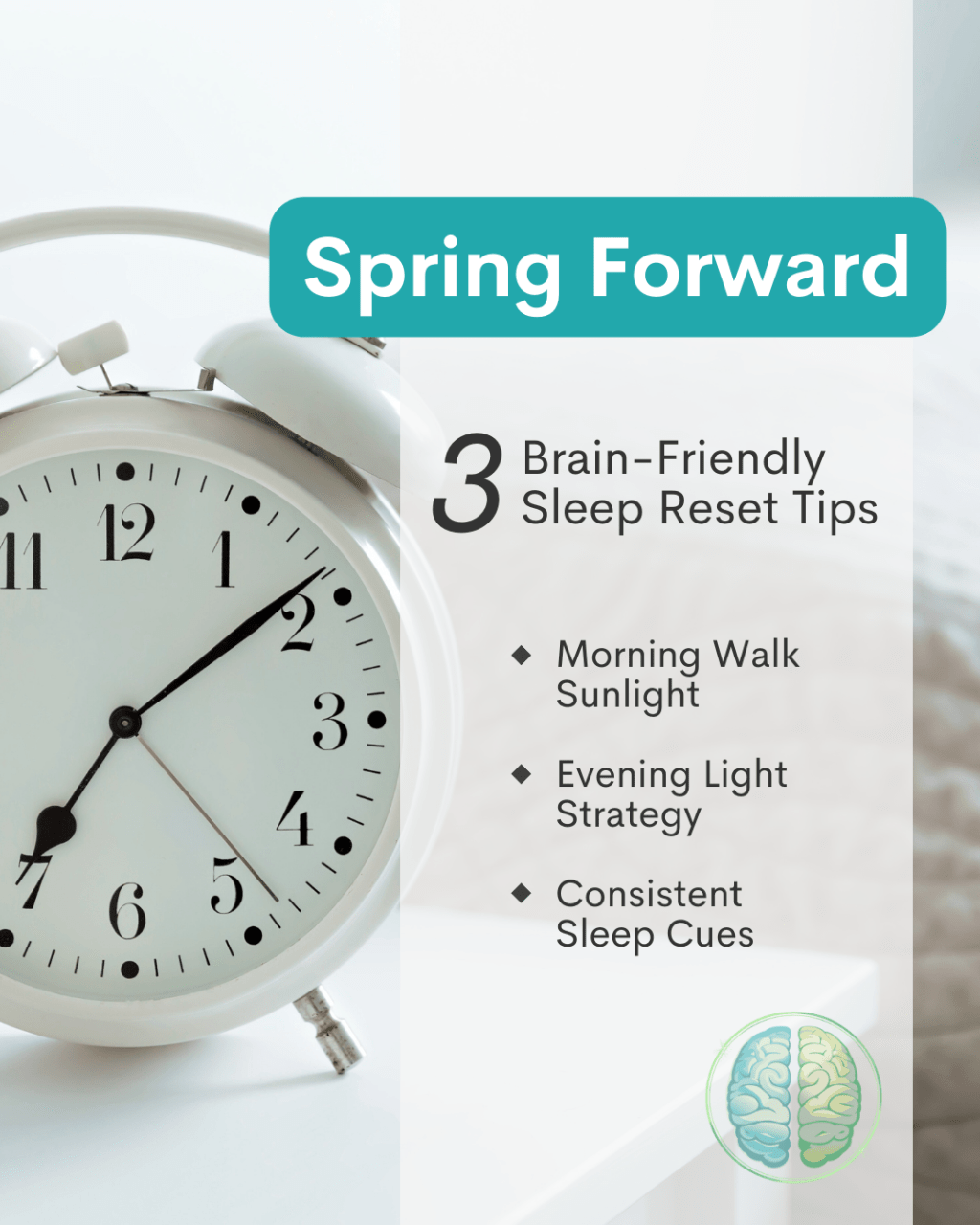
Did you feel the impact of the clock change this past weekend?
That lost hour when we “spring forward” can be surprisingly disruptive!
A few people have mentioned feeling unusually foggy and tired since Sunday. When I asked about the clock change, they’re eyes widened with recognition – that missing hour of sleep was affecting them more than they realized.
These conversations reminded me how even small sleep disruptions can have noticeable effects on our brain function and mood, especially for those already running on a sleep deficit.
📍How Sleep Shapes Your Brain
Did you know? During sleep, your brain isn’t just resting – it’s actively working on essential maintenance!
While you sleep, your brain clears out waste products that accumulate during the day through the glymphatic system – think of it as your brain’s nighttime cleaning crew.
Sleep is also when your brain consolidates memories, moving information from short-term to long-term storage. This is why learning feels easier after a good night’s rest, and why foggy thinking is often the first sign of insufficient sleep.
Research shows that just one night of poor sleep can reduce your brain’s glucose metabolism – directly impacting your energy levels and cognitive function.
📍3 Brain-Friendly Sleep Reset Tips
Here are three practical approaches to help your brain adjust after the clock change (or anytime your sleep needs a reset):
🌟1️⃣ Morning Walk Sunlight
Your brain’s internal clock is powerfully reset by morning sunlight exposure.
Spring is the perfect time to start a morning walk habit – even 10 minutes can make a significant difference to your sleep-wake cycle.
Try this: Take a short morning walk within an hour of waking up. The combination of movement and natural light is a potent signal to your brain that it’s time to be fully awake.
This morning light exposure (even on a cloudy day) helps set your body clock for the entire day, making it easier to feel sleepy at the right time in the evening.
Just as morning light starts your day right, managing evening light is equally important for quality sleep.
🌟2️⃣ Evening Light Strategy
Your brain’s melatonin production (your sleep hormone) is highly sensitive to light exposure in the evening hours.
Blue light from screens can disrupt this natural process, potentially delaying sleep by up to 3 hours.
Try this: Create a “light down-shift” in the evening. Dim your home lights 2-3 hours before bedtime and switch to warmer lighting where possible.
For screen use after sunset, activate blue light filters on your devices and consider an “electronics shut-down time” in the evening.
🌟3️⃣ Consistent Sleep Cues
Your brain loves predictability, especially when it comes to sleep patterns.
Creating a consistent pre-sleep routine helps your brain recognize when it’s time to wind down.
Try this: Choose 2-3 calming activities to do in the same order each night – perhaps listening to calming music, gentle stretching, and reading a physical book.
This evening wind-down routine can be nicely paired with your “electronics shut-down time”!
The key is consistency – when you repeat these activities in sequence, your brain begins releasing sleep hormones in anticipation, making the transition to sleep smoother.
Even on weekends, try to keep your wake time within 30-60 minutes of your weekday schedule to maintain your brain’s sleep-wake rhythm.
📍Question for you today
Which of these three sleep reset approaches would fit most naturally into your evening routine tonight?
Wishing you restorative rest,
Dr Sui Wong
PS – You might enjoy my interactive book “Sleep Better to Thrive” which offers a actionable strategies to improve sleep.
PPS – I was delighted to see many of you on last week’s BRA(i)NS® Method Masterclass: from Stressed to Strength. Great participation and discussions! My next BRA(i)NS® Method Masterclass will be on sleep optimization. Do reply back to let me know if you’re interested!
Spread the love! ❤️ Share this post with someone who will enjoy my Thursday Tips [TT].
If you received this as a forwarded link, please sign up to the [TT] newsletter via bit.ly/drwongbrainhealth
INSTAGRAM: drsuiwong.neurologist | LINKED IN: linkedin.com/in/dr-sui-wong-neurologist
My mission here is to share good quality, actionable information that empowers people to improve their brain health and wellbeing.
Thank you for your support!
 Dr Sui Wong Empowering Your Brain Health
Leave a comment