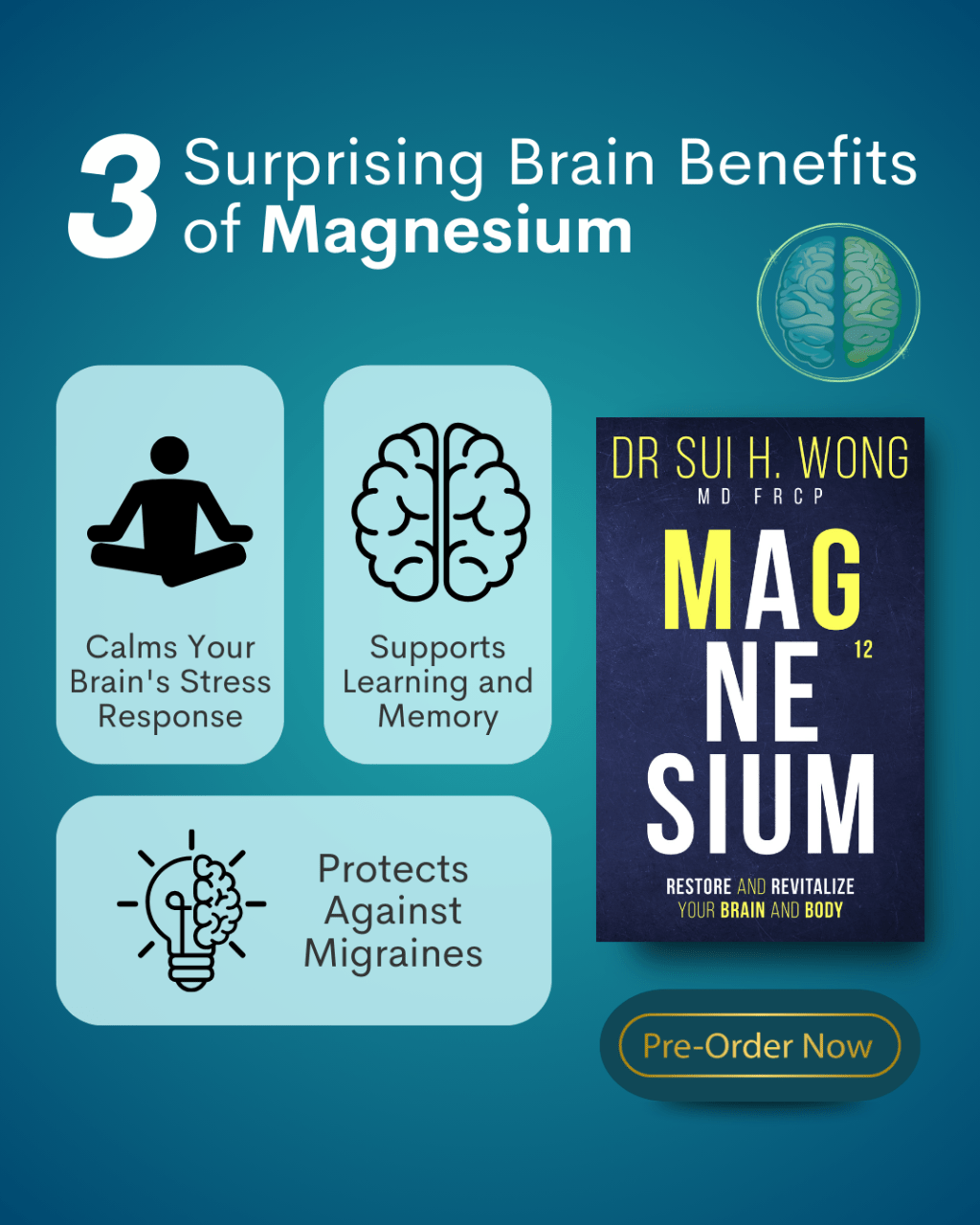
I just spent last weekend putting the final touches on my new book,
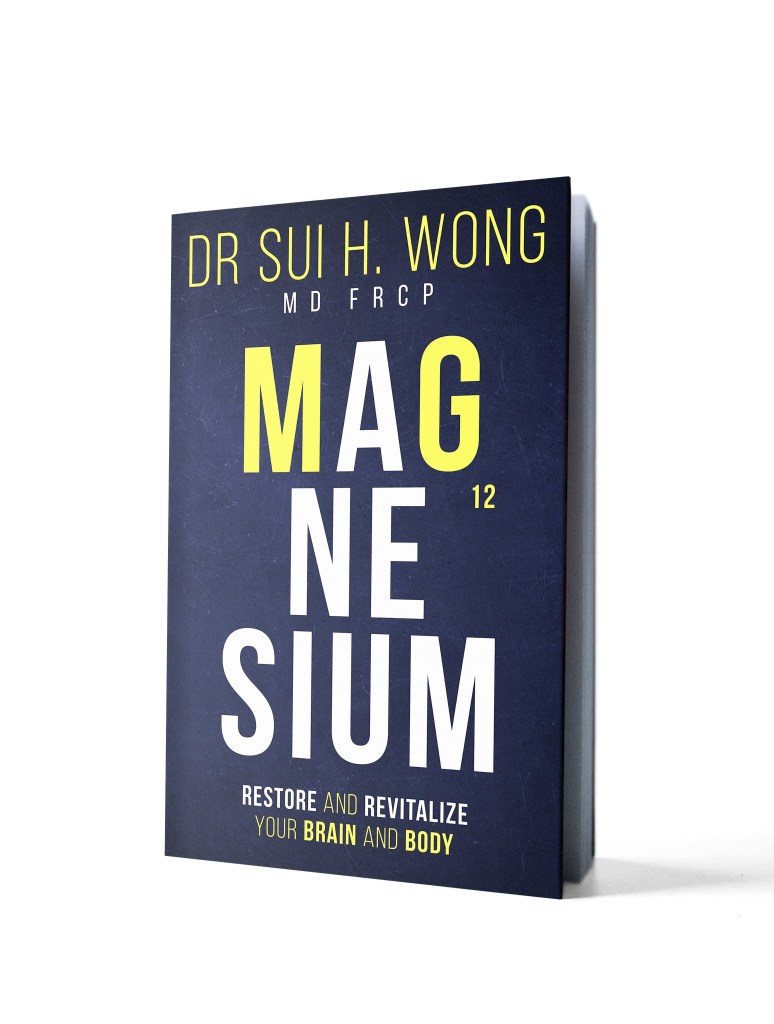
“Magnesium: Restore and Revitalize Your Brain and Body”
🎉
I’ve been working on this book for almost 2 years, although my deep dive into magnesium started more than a decade ago – in my typical way when I encounter a topic of interest! 😆
In my work as a neurologist, magnesium has been shown to help migraine.
Did you know that up to 50% of people in Western countries consume less than the recommended amount of magnesium, and in the USA it’s estimated that nearly 45% of the population may have insufficient magnesium intake?
Sadly, modern agricultural practices, food processing, and dietary choices have all contributed to this issue.
📍How Does Magnesium Support Your Brain Health?
Magnesium is involved in over 600 enzymatic reactions in your body, many directly affecting your brain function.
This essential mineral helps regulate neurotransmitters, supports energy production in brain cells, and provides natural protection against excessive neural excitation.
Adequate magnesium levels support learning and memory, mood regulation, and may even help protect against age-related cognitive decline.
Magnesium is also important for insulin function and glucose metabolism – supporting stable blood sugar levels that your brain depends on for steady energy (which I covered in my book “Sweet Spot for Brain Health”)
When your blood sugar fluctuates dramatically due to insulin resistance, it can affect your concentration, mood, and cognitive function – something I see regularly in my neurology practice.
📍3 Brain Benefits of Magnesium
🌟1️⃣ Calms Your Brain’s Stress Response
Magnesium helps regulate your body’s stress response system.
When magnesium levels are optimal, your brain is better equipped to manage stress.
This mineral acts as a natural brake on excitatory neurotransmitters, preventing your brain from becoming overstimulated.
Many patients report improved sleep quality when their magnesium levels are balanced – creating a virtuous cycle for brain recovery each night.
🌟2️⃣ Supports Learning and Memory
Magnesium plays a key role in the brain’s neuroplasticity – its ability to form new connections.
It helps regulate NMDA receptors, for learning and memory formation.
Optimal magnesium levels may enhance both short-term and long-term memory function, potentially supporting cognitive health as we age.
🌟3️⃣ Protects Against Migraines
In my neurology practice, magnesium is one of my most frequently recommended supplements for migraine prevention.
Magnesium can help reduce both the frequency and intensity of migraines for many sufferers.
📍Top Food Sources of Magnesium
Boost your magnesium intake with these brain-friendly foods:
Dark leafy greens (spinach, kale)
Nuts and seeds (especially pumpkin seeds, almonds, and cashews)
Whole grains (brown rice, quinoa)
Legumes (black beans, chickpeas)
Dark chocolate (look for 70%+ cocoa content)
Bonus Tip:
Consuming Vit C rich foods such as fruit and veg enhances the absorption of magnesium!
Did you notice nature’s way of combining both in the same food item? 🙂
📍Question for you today
Which magnesium-rich food could you add to your meals this week to support your brain health?
Bonus Q: what questions do you have about magnesium that you’d like me to cover? (see PS*)
Wishing you vibrant brain energy and clarity,
Dr Sui Wong
*PS – My new book answers the most frequently asked questions about magnesium, including: What’s the best form to supplement with? How much do we need daily? Can it interact with medications? When is the best time to take it? What’s the connection between magnesium and sleep quality? All explained in clear, practical language with actionable recommendations.
PPS – “Magnesium: Restore and Revitalize Your Brain and Body” is available for pre-order now at a special pre-launch price of £2.99/$2.99 – but only for a limited time before the price increases! Book launches on 1st May 2025! Will be available in Kindle, Paperback/Hardcover, Audiobook. Pre-order only available for Kindle.
 Dr Sui Wong Empowering Your Brain Health
Leave a comment