🌟[TT] can’t meditate? 🧠
“I can’t meditate – my mind is too busy!”
I hear this regularly when mindfulness comes up in discussions in my neurology practice or mindfulness research studies.
Many people think mindfulness requires sitting still for 30 minutes, emptying the mind completely.
But what if I told you that you’re probably already capable of mindfulness – you just haven’t recognised it yet?
After seeing remarkable benefits in my research participants with neurological conditions (which inspired my book “Mindfulness for Brain Health”), I’ve learned that the key isn’t forcing your mind to be quiet.
It’s about creating brief mindful moments throughout your day.
📍3 Ways to Practice Mindfulness Without “Meditating”
🌟1️⃣ The Handwashing Haven
Transform your regular handwashing into a mindfulness practice.
Notice the temperature of the water on your skin, the sensation of soap creating lather, the sound of water flowing. Check your body – are your shoulders pulled up? Is your jaw clenched? Can you soften your stance for these 20 seconds?
This isn’t about washing more slowly – it’s about bringing gentle awareness to something you already do multiple times daily.
Try this: During your next handwash, take just three conscious breaths while feeling the water. That’s it. You’ve just practised mindfulness!
🌟2️⃣ A Mindful Cup of Tea
Your daily tea or coffee break is a perfect mindfulness opportunity.
Hold the warm cup between your hands – notice the heat spreading through your palms. Inhale the aroma before your first sip. Notice how the taste changes from the first sip to the last.
No need to drink in slow motion – simply bring awareness to something you’re already enjoying.
Try this: For just the first three sips, really taste your drink. Then carry on normally. Small moments count!
🌟3️⃣ Nature Noticing
Step outside – even just to your doorstep or by a window. Instead of trying to notice everything, pick one sense to focus on for 30 seconds each.
Sight: Notice three different shades of green, or the way light catches on surfaces. Sound: Pick out the furthest sound you can hear, then the closest.
This “open awareness” practice gives your busy mind something specific to do rather than trying to stop thinking.
Try this: Do this as you breathe five slow breaths. That’s all. Your mind may wander, and that’s normal and perfectly fine!
📍Why This Works for Your Brain
These micro-practices activate the same brain networks as formal meditation, particularly your insula (body awareness) and anterior cingulate cortex (attention regulation).
Research shows that informal mindfulness practices can reduce the stress hormone (cortisol), improve focus, and enhance emotional regulation.
The key is frequency, not duration.
Three 30-second mindful moments throughout your day can be more beneficial than one stressful attempt at 20-minute meditation.
Your “busy mind” isn’t a barrier to mindfulness, and these practices of mindful moments work with your mind and not against it.
📍Try This Week
Choose just ONE of these practices. Do it imperfectly for 30 seconds each day. Notice what happens when you stop trying to “clear your mind” and simply pay attention instead.
📍Question for you today
PS – Want guided support? I’ve created audio guides for the Mindful Cup of Tea and Open Awareness practices. Join our free BRA(i)NS® Clarity Community to access them: https://www.skool.com/dr-sui-wong-brains-group-3768/about?ref=0a524f8ef4a9467792af9f4fe43a7d8c
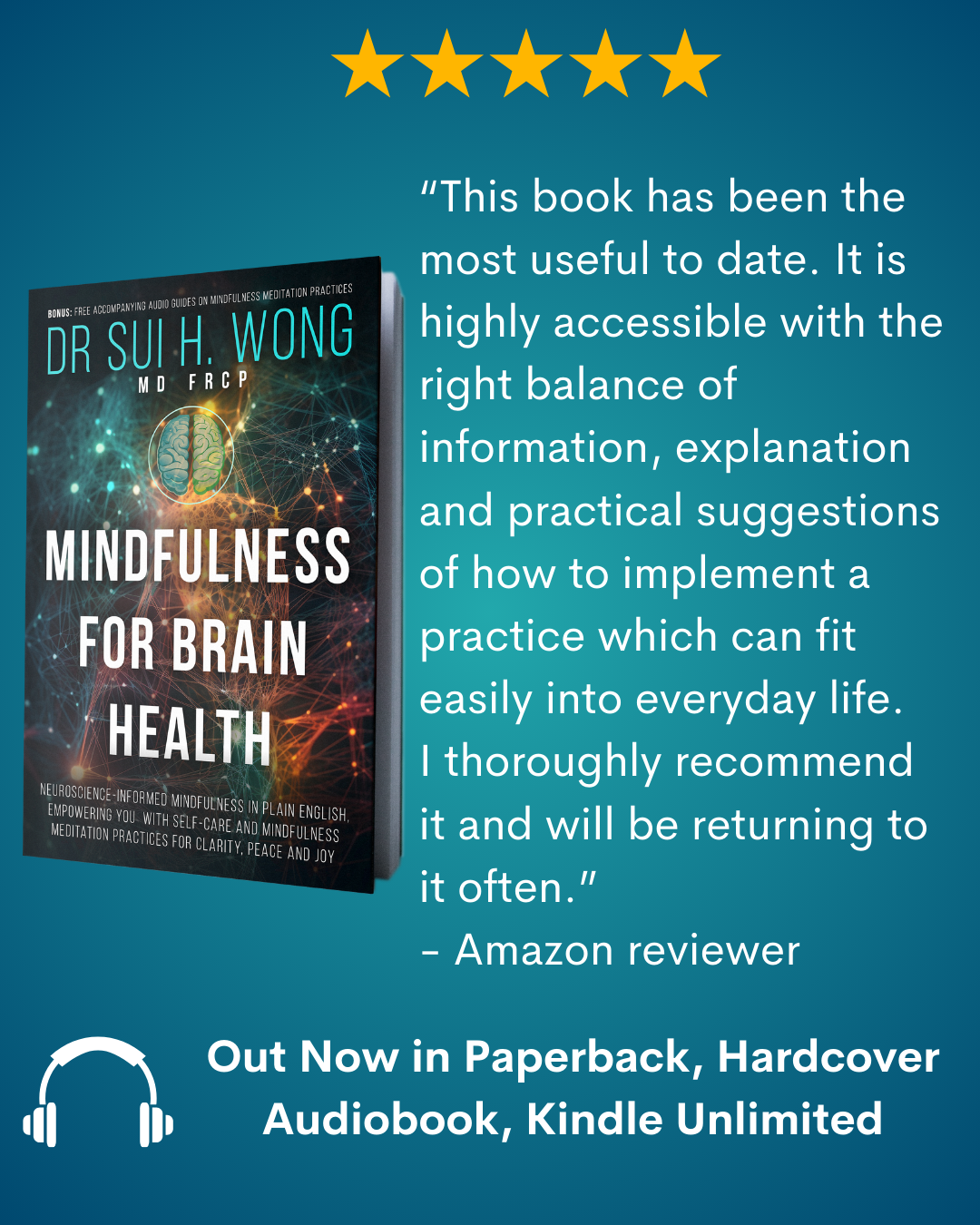
PPS – 🎉 I have a “Black Friday” thank-you bonus for you as a subscriber to my Thursday Tips! Get an audiobook copy of Mindfulness for Brain Health at 75% off (code BF75) using this link: https://app.hiro.fm/channel/mindfulness-for-brain-health
use the code BF75 for 75% off, at $3 (RRP $11.99)
This book is also available in paperback/ hardcover formats, wherever good books are sold, learn more here: https://books2read.com/u/4XNXAg The audiobook is also available on other platforms eg Audible, and Spotify.
References:
Carmody & Baer (2008); Hindman et al (2015); Howard et al (2019); Moore & Malinowski (2009); Wong (2024)
📌 Summary
Many people believe mindfulness requires long meditation sessions or an empty mind, but research shows your brain benefits just as much from brief, everyday “micro-mindfulness.” These small moments activate attention and body-awareness networks (insula, ACC), reduce cortisol, and improve emotional regulation. By transforming daily activities—handwashing, drinking tea, stepping outside into mindful cues, you can train your brain in under two minutes without formal meditation.
❓ FAQ
- Can I practice mindfulness even if my mind is very busy?
Yes. Mindfulness doesn’t require an empty mind only gentle awareness. Even 30-second practices activate key brain networks involved in focus and regulation. - Do short mindful moments really work as well as meditation?
Micro-practices trigger similar neural pathways as formal meditation. Frequency matters more than duration, and small, consistent moments can lower stress and improve clarity. - What’s the easiest mindful moment to start with?
Most people find mindful handwashing or the first three sips of tea/coffee the easiest because they fit naturally into your existing routines.
Spread the love! Share this post with someone who will enjoy my Thursday Tips [TT] newsletter.
If you received this as a forwarded link, please sign up to the [TT] newsletter via bit.ly/drwongbrainhealth
INSTAGRAM: drsuiwong.neurologist | LINKED IN: linkedin.com/in/dr-sui-wong-neurologist
My mission here is to share good quality, actionable information that empowers people to improve their brain health and wellbeing.
Thank you for your support!
 Dr Sui Wong Empowering Your Brain Health
Leave a comment