🌟[TT] Circle 🧠
Last month I made a brief appearance on the ITV evening news as an expert on the GLP-1 drugs (like Ozempic). The question concerned a possible link with a neuro-ophthalmological condition (NAION, if you’re wondering).
The interview made me reflect. Some patients I’ve seen feel so desperate about their weight that they feel they don’t have a choice.
This isn’t a piece about whether GLP-1 drugs are right for someone. That’s a personal medical conversation.
It’s about the feeling underneath. The one that surfaces long before any prescription.
And that feeling isn’t limited to weight.
Perhaps you’ve struggled with stress, and felt you didn’t have a choice.
Or you’re tired all the time, and feel you don’t have a choice.
Or work, family, and life are stacked so high that “no choice” has quietly become the default setting.
The thing I’ve come to notice, after twenty-six years in clinical practice, is that the question of choice is rarely about willpower alone.
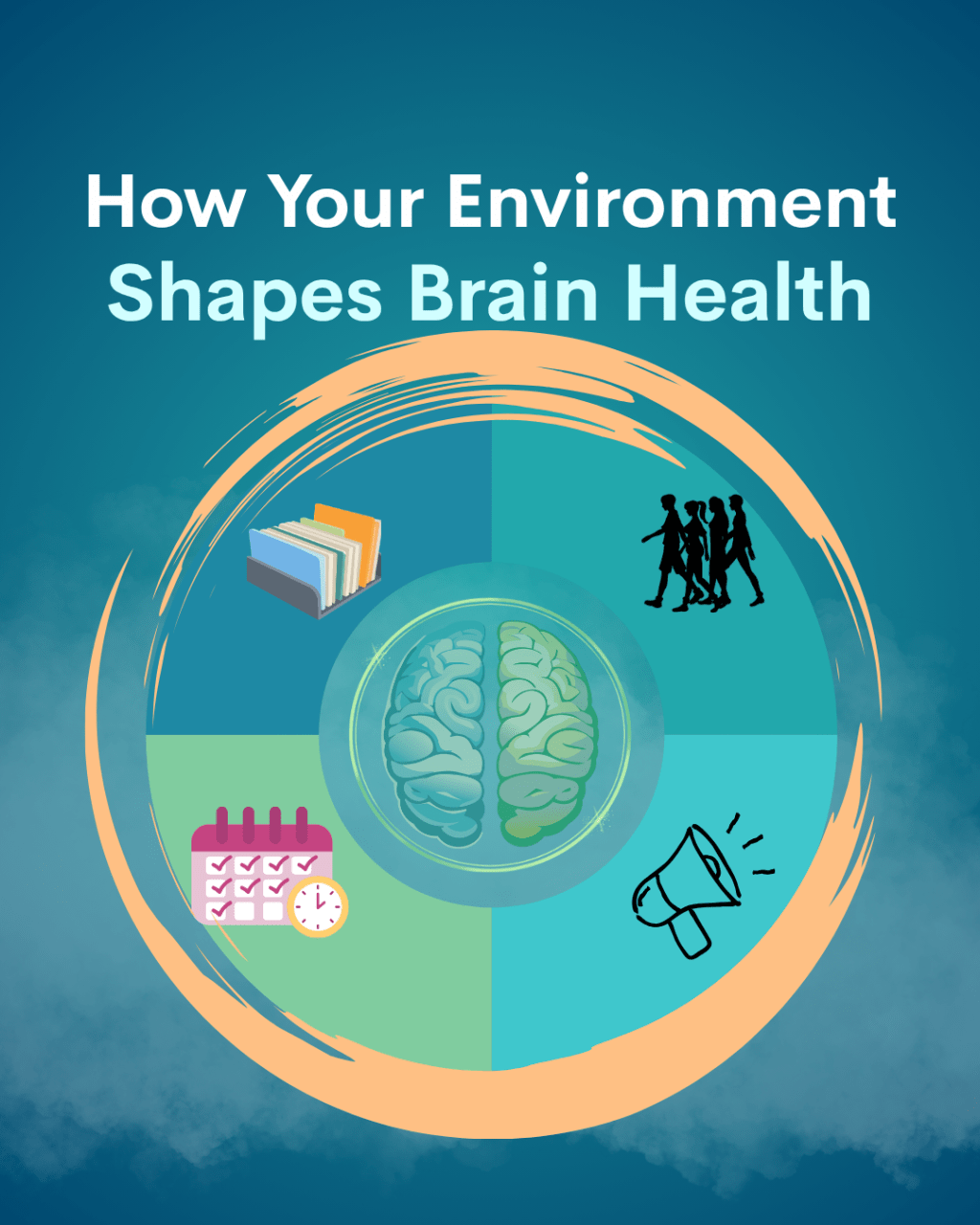
It’s about the circle around you. The environment you move through. The people you spend time with. The defaults that quietly shape your day before you’ve even made a conscious decision.
📍Three ways to shape your circle
[1] Change one thing in your environment, not your willpower
Move the fruit bowl to the counter and the biscuits to a high cupboard.
Lay tomorrow’s walking shoes by the front door tonight.
Put the phone charger in the kitchen, not the bedroom.
These look like trivial changes. They aren’t. About 43% of daily behaviour is repeated in the same context, often while we’re thinking about something else*. The cue triggers the action before any conscious decision happens. Redesign the cue, redesign the action.
Pick one. Just one. The one that feels almost too small.
[2] Look at your circle
Who do you spend time with around food, around movement, around rest?
Not to judge anyone. Just to notice.
Your circle is shaping your behaviour in the background, whether you’ve recognised it or not. A meta-analysis of 24 trials in 4,919 adults found that weight-loss interventions with a social-support component produced significant effects at the end of the intervention and at 3 and 6-month follow-up*. Although the authors noted more studies are needed, the direction is consistent. Who’s around you matters.
If your closest people aren’t on board with the change you want to make, that’s worth knowing. Not so you can blame them. So you can plan around it.
[3] Borrow a community before you need it
A walking group. A book club. An online community. A single accountability partner. A WhatsApp thread with one honest friend.
The mistake we tend to make is waiting until we’re struggling to look for our people. By then, the “no choice” feeling is already loud, and reaching out feels like one more thing on a long list. The community is what carries you through the hard days. So find it on a good day, when you don’t need it yet.
That’s also why my BRA(i)NS® Clarity Community exists, and why it’s free (link here to join). A space to be among people thinking carefully about brain health, before any of us are in crisis.
📍 The brain science of your circle
Why does your environment have so much power, and why do the people around you shape your behaviour even when you’ve decided otherwise?
First, the brain runs on autopilot more than we’d like to admit. About 43% of daily behaviour is repeated in the same context, often while we’re thinking about something else.*
Change the cue, change the behaviour. This is why Tip 1 isn’t a willpower hack. It’s a circuit redesign.
Second, when stress hits, the prefrontal cortex (PFC) rapidly goes quiet*. The PFC is the part of the brain that holds options in mind, weighs them up, and steers thoughtful action. Under stress, options become harder to perceive. Not because they aren’t there, but because the part of you that perceives them has temporarily clocked off.
When the PFC is offline, the brain falls back on whatever is automatic. Whatever’s been running in the background. The environment. The defaults. The people you spend time with.
In other words, your circle is what the brain reaches for when willpower has nothing left.
This is why the Optimisation pillar of the BRA(i)NS® Method gives Community and Habits the weight it does. Your circle is a brain training input.
📍 Question for you today
What’s one small thing in your environment, or one person in your circle, that quietly supports your brain health?
Wishing you a circle that carries you,
Dr Sui Wong
PS. If today’s piece resonated, you’ll like my upcoming free Your Peak-Performance Brain Masterclass. Today’s newsletter is about reclaiming one small choice through your circle. The Masterclass goes wider: how those small choices compound into a full brain health ecosystem. Sign up here: [link]
*References:
- Wood and Rünger 2016 https://www.annualreviews.org/content/journals/10.1146/annurev-psych-122414-033417
- Jensen et al., 2024 https://www.nature.com/articles/s41366-024-01468-9
- Arnsten 2009 https://www.nature.com/articles/nrn2648
Summary
Our sense of “no choice” is often shaped by our environment, habits, and the people around us, not just willpower. Small shifts in daily cues and building supportive connections can gently guide behaviour in a healthier direction, especially during times of stress when the brain defaults to automatic patterns.
FAQ
What does “your circle” mean in this context?
It refers to your environment, daily cues, and the people you spend time with, all of which influence your behaviour.
Why do small environmental changes matter so much?
Because much of daily behaviour happens automatically. Simple cues like what you see first can guide actions without needing effort.
How can I start improving my circle today?
Pick one small change, like moving something visible in your space or reaching out to one supportive person.
What if I don’t have a supportive circle yet?
You can start small by joining a group, even online, or connecting with one person who shares a similar goal.
Books: available where all good books are sold, in print, eBook and audiobook formats. LEARN MORE: Mindfulness for Brain Health , Break Free From Migraines Naturally, Sleep Better to Thrive, Quit Ultra-Processed Foods Now, Sweet Spot for Brain Health, Magnesium: Restore & Revitalize Your Brain & Body
My mission:
To inspire a movement for better brain health.
Because better brain health supports better wellbeing. And better wellbeing creates a ripple effect that benefits individuals, families, communities, and beyond.
Making the world a better place for all.
I am a practising medical doctor (MBBS MD FRCP MA FHEA DipIBLM) working as a Neurologist and Neuro-Ophthalmologist, and am an active neuroscience researcher. My research is inspired by questions arising from my busy clinical practice, and I am grateful that both have been recognised with awards.
I am also an Author and Speaker, creating public-facing health content in my spare time.
Learn more:
drsuiwongmd.com
Join me on my mission?
>> Spread the love! ❤️ Share this email with someone who will enjoy my Thursday Tips [TT] newsletter.
>> Follow me on:
INSTAGRAM: drsuiwong.neurologist | LINKED IN: linkedin.com/in/dr-sui-wong-neurologist | YouTube: http://www.YouTube.com/@DrSuiWong
If you received this as a forwarded link, please sign up to the [TT] newsletter via bit.ly/drwongbrainhealth
Thank you for your support!
(C) 2024-2026 Dr Sui H. Wong MD FRCP


Leave a Reply