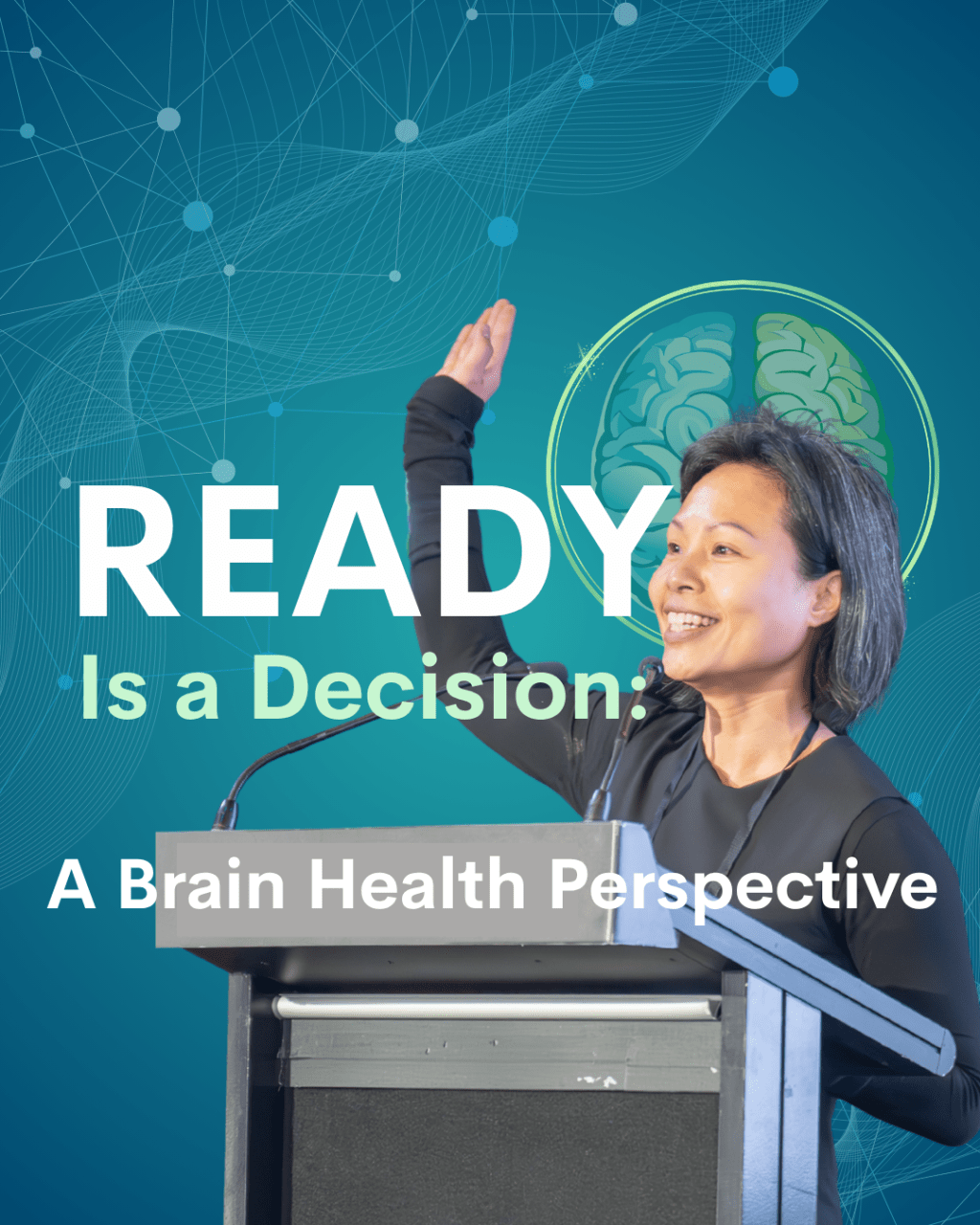
🌟[TT] Ready 🧠
“Ready is not a state. Ready is a decision.”
I heard this from a course I’m doing about social media (I have to be honest, I have a block on knowing how to show up on social media in a helpful way! So what do I do? Sign up for a course 🤣)
This phrase resonated so much with me as I prepared content for this week’s Brain Health Podcast (because I was waiting to feel ready!), and it inspired that episode, and even this week’s Thursday Tips!
Because sometimes we think that we need to feel ready to move forward.
Maybe you’re waiting until you’re “ready” to start something?
The exercise routine you’ll begin “when life calms down”. The conversation you’ve been putting off. The brain health habit you’ll start “next Monday”.
We wait for an internal signal that says, “okay, now I’m ready”.
“Ready is not a state. Ready is a decision.”
Sit with that for a moment.
And there you go – so many things we can learn from those younger than us, hey!😄
Most of us are waiting to feel ready before we start. But that feeling rarely arrives the way we imagine it will. Instead, you can make the decision and start from there.
So with that, today’s Thursday Tips is inspired by that young millennial’s comment.
📍3 “Ready” Tips for your Brain Health
[1] Pick the 1% version
Instead of waiting for the perfect time to begin, choose the smallest possible version of the action. One push-up. One mindful breath. One glass of water.
When I started this Thursday Tips newsletter back on the 29th of February 2024, it took me 2 to 3 weeks to write a single post!
I had no idea what to write. Two years and three months on, the tips have shaped themselves through showing up every Thursday.
This is like the 1% analogy I give when talking about the BRA(i)NS® Method.
Think of each 1% like a piece of wool fibre. The fluff on its own isn’t strong. But when wound up, added to each other, it becomes a thread. The threads come together to form a strong rope.
>> Try this: What’s the 1% version of a brain health habit you’ve been putting off? Take a small step towards that today
[2] Decide for the next 24 hours
Big commitments can feel paralysing. “I’m going to start exercising daily for life” is a lot for the brain to hold.
Try shortening the window. “I’m going to walk for 10 minutes today.” That’s it.
A 24-hour decision is small enough that your brain doesn’t put up resistance. Tomorrow, you decide again.
>> Try this: Pick one action for the next 24 hours only. Decide now.
[3] Notice the wait
When you catch yourself thinking “I’m not ready yet”, pause. Ask: “What would ‘ready’ actually look like? Have I felt that way before, or am I waiting for something that never quite arrives?”
For me, waiting to feel ready for recording an episode of my podcast or posting something useful on social media led to…. nothing. The honest answer was: ready was never coming as a feeling. It had to come as a decision.
>> Try this: Next time you notice the wait, name it. “I’m waiting to feel ready.” Then ask: “Could I decide instead?”
📍The Brain Science Behind “Ready as a Decision”
There’s interesting research on how confidence and capability actually build.
Albert Bandura’s foundational work on self-efficacy showed that the feeling of being able to do something is built primarily through what he called “performance accomplishments”. In other words, doing the thing.
So, this translates to: don’t think too much! Don’t wait until you feel ready. Just do it, even imperfectly.*
Because action is what shifts the brain’s sense of “I can do this”.
This maps onto how your prefrontal cortex works. Decision-making, planning, and initiating action all sit in this region. All these get better with practice. Each time you decide and act, you reinforce the neural pathways involved.
There’s also research on implementation intentions (the “if/when, then” approach I shared in a previous [TT]). Planning when, where, and how you’ll do something significantly increases follow through compared to relying on motivation alone.*
📍Where this sits in the BRA(i)NS® Method
This idea lives in the Optimisation pillar, specifically within mindset.
A quick refresher: the BRA(i)NS® Method has Purpose and Meaning as its container, with three pillars inside. Building Brain Resilience covers your physical foundations. Balancing the Autonomic Nervous System covers your stress and relaxation responses. Optimisation pulls these together through mindset, habits, and community, and sustains them over time.
“Ready is a decision” is a mindset shift. And like all mindset shifts, it compounds. Each time you decide and act, the next decision becomes a little easier.
📍Question for you today
What’s one thing you’ve been waiting to feel ready for? And what would deciding (rather than waiting) look like for you this week?
Do reply to let me know, I’d love to hear it.
Wishing you the courage to act,
Dr Sui Wong
PS: The latest Brain Health Podcast episode goes deeper into this “Ready is a Decision” concept, alongside the brain strain idea from last week’s TT. Head to BrainHealth.fm to listen.
PPS: Come and join us in the BRA(i)NS® Clarity Community on Skool for positive brain health chit chat. Link: https://www.skool.com/dr-sui-wong-brains-group-3768/about
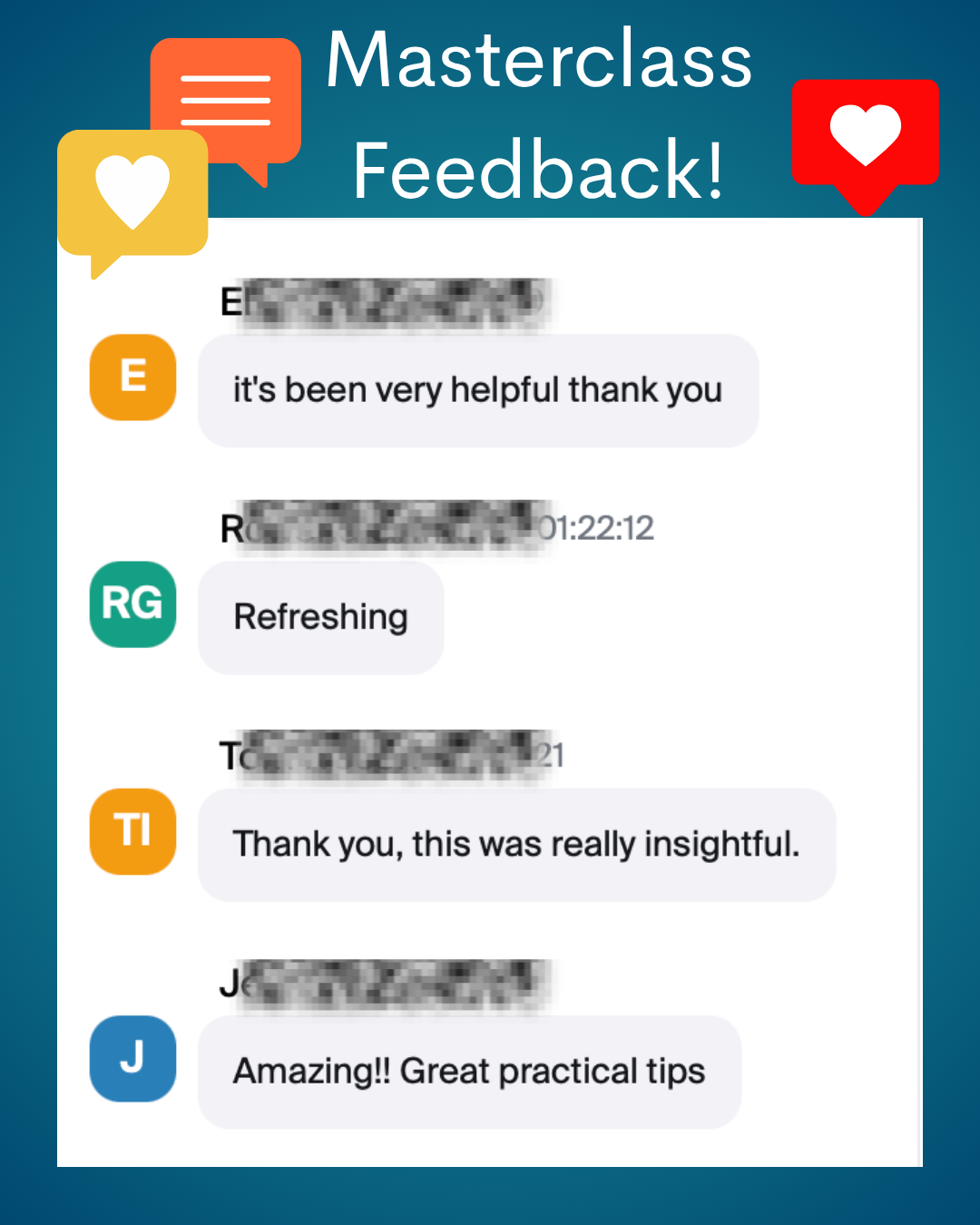
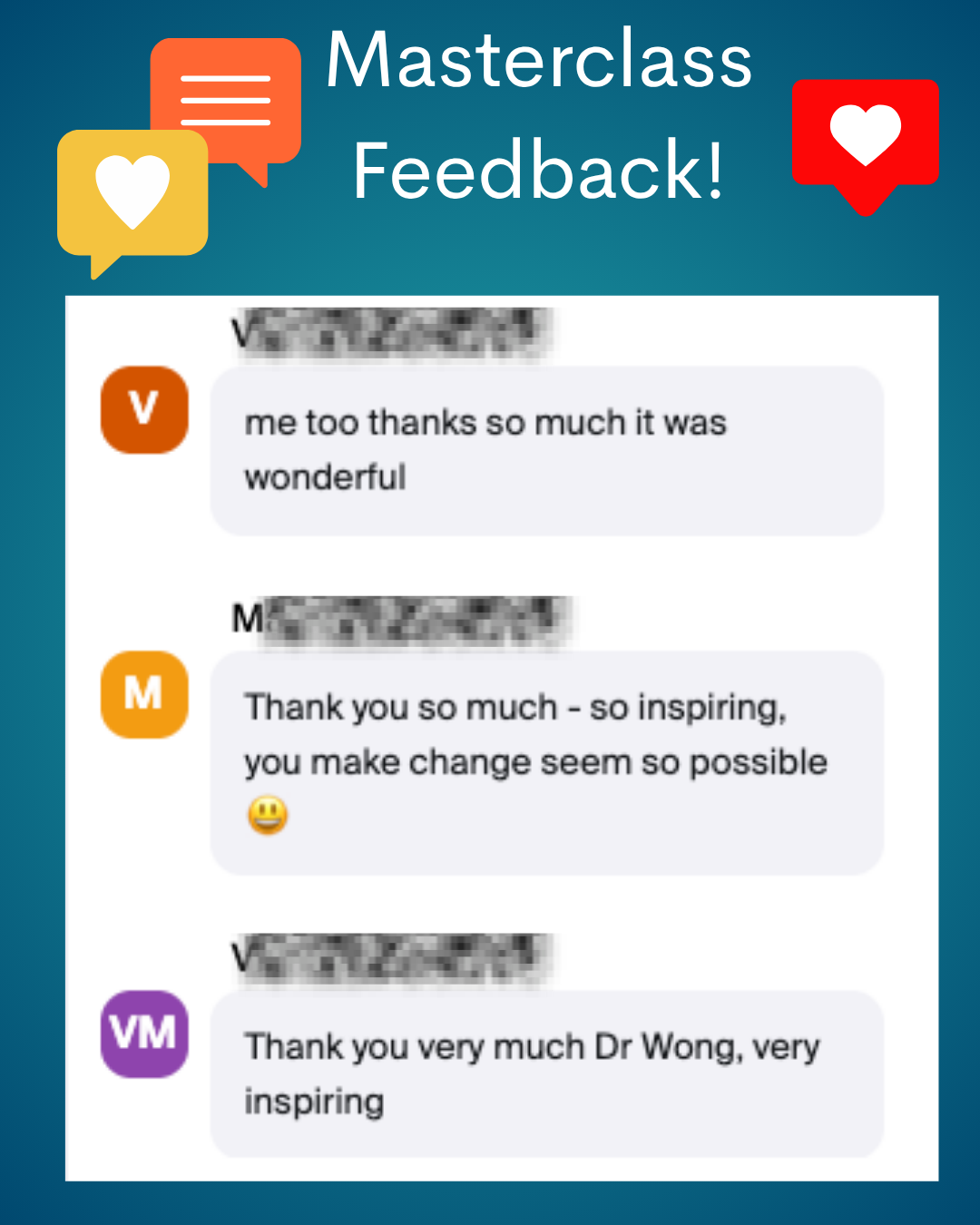
It is also where you can get access to the time-limited recording of my free masterclass about Peak Performance Brain. Below was some feedback during the session (thank you!). Catch the recording here now before it expires on Saturday night.
(if you’re not yet part of the free BRA(i)NS® Clarity Community, you’ll need to request access first)
*References:
📌 Summary
Many of us wait to feel ready before starting something important, but readiness often develops through action rather than before it. Small decisions, repeated consistently, can strengthen confidence, build habits, and support long-term brain health over time.
❓ FAQ
Why do we wait to feel ready?
The brain naturally seeks certainty and comfort before action, especially when something feels unfamiliar or important.
What does “ready is a decision” mean?
It means progress often begins by choosing to act before confidence fully arrives.
Why are small steps helpful?
Small actions reduce overwhelm and help build momentum and consistency over time.
How does this support brain health?
Repeated decisions and actions help strengthen pathways involved in planning, focus, and habit formation.
Books: available where all good books are sold, in print, eBook and audiobook formats. LEARN MORE: Mindfulness for Brain Health , Break Free From Migraines Naturally, Sleep Better to Thrive, Quit Ultra-Processed Foods Now, Sweet Spot for Brain Health, Magnesium: Restore & Revitalize Your Brain & Body
My mission:
To inspire a movement for better brain health.
Because better brain health supports better wellbeing. And better wellbeing creates a ripple effect that benefits individuals, families, communities, and beyond.
Making the world a better place for all.
I am a practising medical doctor (MBBS MD FRCP MA FHEA DipIBLM) working as a Neurologist and Neuro-Ophthalmologist, and am an active neuroscience researcher. My research is inspired by questions arising from my busy clinical practice, and I am grateful that both have been recognised with awards.
I am also an Author and Speaker, creating public-facing health content in my spare time.
Learn more:
drsuiwongmd.com
Join me on my mission?
>> Spread the love! ❤️ Share this email with someone who will enjoy my Thursday Tips [TT] newsletter.
>> Follow me on:
INSTAGRAM: drsuiwong.neurologist | LINKED IN: linkedin.com/in/dr-sui-wong-neurologist | YouTube: http://www.YouTube.com/@DrSuiWong
If you received this as a forwarded link, please sign up to the [TT] newsletter via bit.ly/drwongbrainhealth
Thank you for your support!
(C) 2024-2026 Dr Sui H. Wong MD FRCP


Leave a Reply