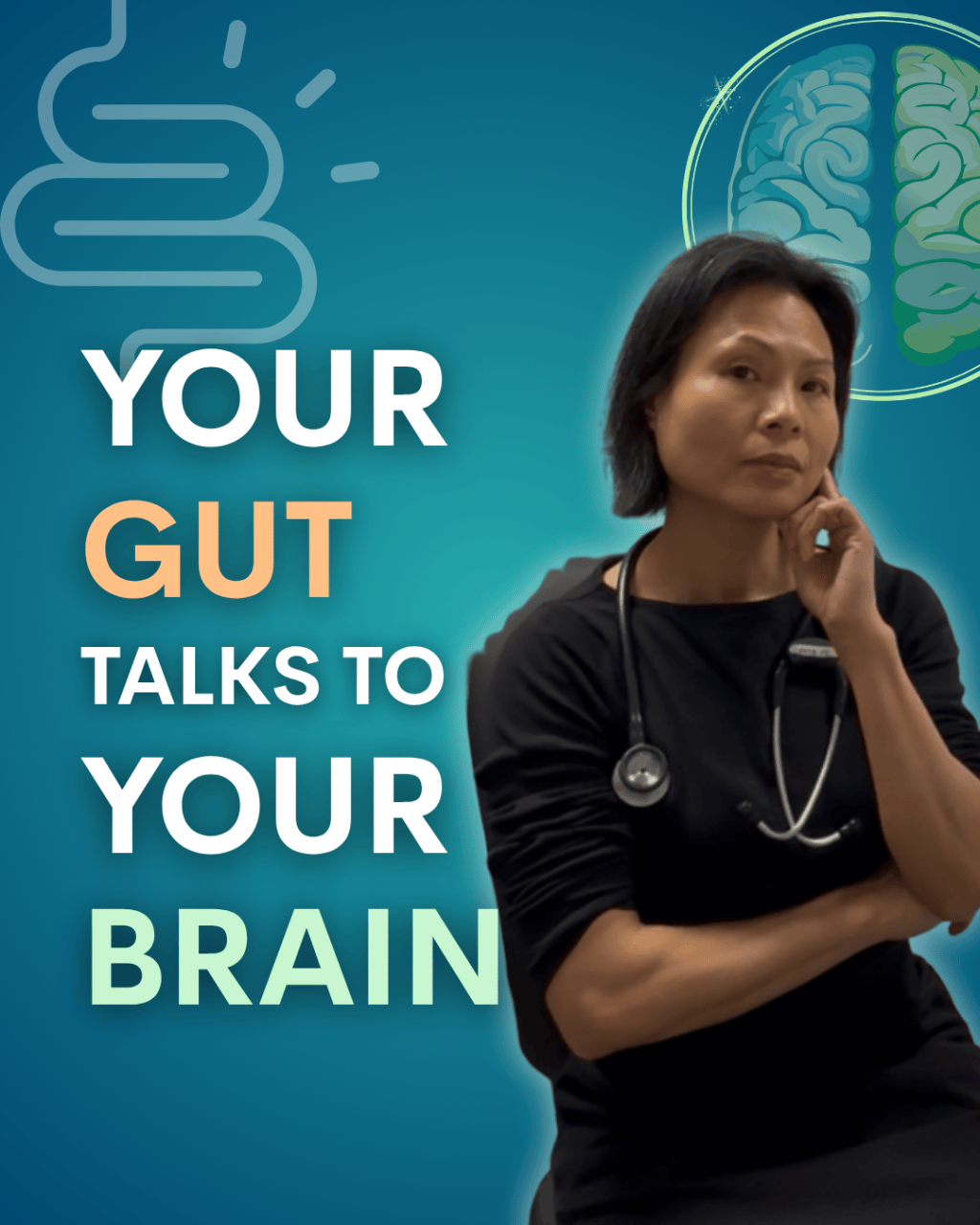
🌟[TT] Digest 🧠
How can you support the gut-brain connection through daily habits?
Three practical habits to try are eating lunch away from your screen, taking three slow breaths before your first bite, and allowing time between meals. Eating without distractions may help you pay attention to your food intake, while slow breathing can support a shift towards parasympathetic activity associated with rest and digestion. Between meals, the digestive system uses migrating motor complex contractions to move residual material through the stomach and small intestine. These habits are practical starting points, although the specific three-breath practice and a 12-hour overnight gap have not been established as universal prescriptions.
Place this summary near the beginning of the blog, after the introduction.
Two weeks ago, in the [TT] on prepping for brain performance, I mentioned that I like batch cooking rice (cooled rice gives you some resistant starch, which feeds your gut bacteria).
It prompted a lovely email from a member of the Thursday Tips Tribe, aka T3 (that’s what I’m calling you, my lovely subscribers!). They asked for more gut health tips, so I shall oblige!
By the way, if there are topics you’d like me to write more about, please reach out anytime. Reader requests are always welcome 🙂
If you’re a high achiever who sometimes feels sluggish or bloated after meals, here are 3 things I’d share with you.
And if you’d like to read how your gut and brain talk to each other, the science section towards the end is for you.
📍3 gut-brain tips to get the best from your brain
[1] Time to eat
Quick check-in: are you reading this while eating lunch at your desk? If so, oops! Sorry, this one’s for you 🙂
Many people do this, because taking 30 minutes out for lunch feels like too much. Is this you?
Your gut works best in “rest and digest” mode. Eating while you work keeps your body in “get things done” mode instead. Setting time aside to eat signals to your body that it’s time to rest and digest.
Try this: this week, eat lunch away from your screen, even if it’s shorter than you’d like.
[2] 3 slow breaths
Many people are surprised by this: 3-5 slow breaths (with a slightly longer exhale if you can manage it) can start to shift your body towards rest and digest. That’s less than a minute.
Slow breathing activates the parasympathetic (rest and digest) branch of your autonomic nervous system.
Try this: before your first bite at your next meal, pause for 3 slow breaths.
[3] Rest your gut
Do you snack after dinner? How long do you give your gut to rest?
Time without food matters too. Between meals, your gut runs a “clean-up crew”: waves of contractions that sweep through the stomach and small intestine to clear what’s left behind.
Eating switches it off.
Try this: aim for a 12-hour gap between your last meal or snack of the day and your first the next day. That’s like sun down to sun up. Reminds you of the olden days when we ate with the rhythms of the day, right? 🙂
📍 Where this sits in the BRA(i)NS® Method
For those new to the Thursday Tips Tribe, welcome!
The BRA(i)NS® Method is my systems-based approach to building your brain health ecosystem, for consistent energy, focus and performance.
Purpose and Meaning is the container that holds it, infusing everything inside.
The three pillars are:
= Building Brain Resilience: your physical foundations
= Balancing the Autonomic Nervous System: your stress and relaxation responses
= Optimisation: pulls these together through mindset, habits and community
All of it is individualised to you, giving the (i) in BRA(i)NS®.
How does today’s [TT] relate to the BRA(i)NS® Method? Gut health is a Building Brain Resilience principle: your gut is part of your physical foundations, and it talks to your brain all day long. This week’s [TT] touches Building Brain Resilience (nutrition, in giving your gut a rest) and Balancing the Autonomic Nervous System (rest and digest, through a proper lunch break and slow breaths), held together by Optimisation (habits). Your (i) is choosing the tip that fits your day: the lunch break, the 3 breaths, or the overnight gap.
📍The Brain Science Behind It*
Your gut and brain talk both ways. The microbiota-gut-brain axis links the two through the vagus nerve, the immune system and chemicals made by gut bacteria, such as short-chain fatty acids. Stress can affect this axis at every stage of life. Much of the mechanistic evidence still comes from animal studies, with human research catching up, so treat this as a promising field rather than settled science.
Stress mode slows digestion. The sympathetic (fight or flight) nervous system mainly dampens gut muscle activity and secretions, while the parasympathetic branch regulates gut tone and movement. This is why a calm meal gives your gut a better chance.
Distracted eating changes how much we eat. A research paper analysing 24 studies (“a meta-analysis”) found that eating while distracted led people to eat moderately more at that meal, and even more later on.
Slow breathing and rest and digest. Another meta-analysis of 223 studies found slow breathing increased heart rate variability (a marker of parasympathetic activity) during the breathing, straight after a single session, and after longer practice. Most studies used sessions of several minutes, so 3 breaths is my practical starting point rather than a tested dose.
The gut’s clean-up crew. Between meals, the stomach and small intestine run a recurring wave of strong contractions called the migrating motor complex. Eating interrupts it, and its absence has been linked with bacterial overgrowth in the small intestine. The 12-hour gap is a sensible rhythm rather than a tested prescription for this.
Safety (common sense) note: If bloating is frequent, doesn’t settle, or comes with weight loss, being sick, a change in bowel habit or blood in your poo, please see your doctor.
📍Question for you this week
Which of the above 3 tips will you try first?
Do let me know, I love hearing from you, and your message comes straight to my inbox.
Wishing you good digestion for your brain performance,
Dr Sui Wong
PS. Despite the best of intentions to stop eating after dinner (Tip 3 above), it’s common to snack later in the evening. Have a listen to Brain Health FM Season 1 Episode 7 where I share why this is not a willpower problem, and what you can do instead. [listen on your favourite podcast player, or YouTube]
*References:
Cryan et al (2019), Browning & Travagli (2014), Robinson et al (2013), Laborde et al (2022), Deloose et al (2012), NHS UK advice on bloating (accessed Oct 2026).


3 Gut-Brain Habits to Try
1. Time to eat
Step away from your screen for lunch, even if you can only manage a short break.
2. Three slow breaths
Pause and take three slow breaths before your first bite, with a slightly longer exhale if comfortable.
3. Rest your gut
Be mindful of your eating schedule and allow time between meals, without forcing a fasting routine that does not suit your needs.
FAQ
What is the gut-brain connection?
The gut-brain connection, also called the microbiota-gut-brain axis, describes the two-way communication between the digestive system and the brain through pathways that include the vagus nerve, immune signalling and chemicals produced by gut bacteria.
Does stress affect digestion?
Yes. The autonomic nervous system regulates digestive activity. Sympathetic activation associated with stress can alter gut movement and secretions, while parasympathetic activity helps regulate digestive function.
Can eating at my desk affect my eating habits?
Eating while distracted may affect how much you eat. The meta-analysis discussed in this article found that distracted eating led people to eat moderately more during the meal and more later on. Taking a break from your screen may help you pay closer attention to your meal.
Can slow breathing help digestion?
Slow breathing can increase heart rate variability, a marker associated with autonomic regulation and parasympathetic activity. Taking three breaths before a meal is a simple starting practice, although the exact three-breath dose has not been established by the research cited in the article.
What is the migrating motor complex?
The migrating motor complex is a recurring pattern of contractions in the stomach and small intestine that occurs between meals. It helps move residual material through the digestive tract. Eating interrupts this activity.
Should I leave 12 hours between dinner and breakfast?
A 12-hour overnight gap is the practical routine suggested in this Thursday Tip, not a universal medical requirement. Your needs may vary depending on your health, medication, nutritional needs and circumstances. Anyone who needs regular food intake for a medical reason should follow their clinician’s advice rather than impose a fasting window.
What can I do about frequent bloating?
Consider your eating patterns and any symptoms that seem to trigger bloating. If bloating is frequent, persistent or accompanied by unexplained weight loss, vomiting, changes in bowel habits or blood in your stool, seek medical advice.
How does gut health fit into the BRA(i)NS® Method?
Gut health is part of Building Brain Resilience, which focuses on the physical foundations of brain health. Eating habits and meal timing connect with nutrition, while slow breathing relates to Balancing the Autonomic Nervous System. Optimisation brings these elements together through consistent, individualised habits.
My mission:
To inspire a movement for better brain health.
Because better brain health supports better wellbeing. And better wellbeing creates a ripple effect that benefits individuals, families, communities, and beyond. Making the world a better place for all. And it all starts with you as the individual.
I am a practising medical doctor (MBBS MD FRCP MA FHEA DipIBLM) working as a Neurologist and Neuro-Ophthalmologist, and am an active neuroscience researcher. My research is inspired by questions arising from my busy clinical practice, and I am grateful that both have been recognised with awards.
I am also an Author and Speaker, creating public-facing health content in my spare time.
Learn more:
drsuiwongmd.com
>> Join the Brain Health Movement: Share this email with someone who will enjoy my content. See link to socials below
>> Follow me on:
INSTAGRAM: drsuiwong.neurologist | LINKED IN: linkedin.com/in/dr-sui-wong-neurologist | YouTube: http://www.YouTube.com/@DrSuiWong
If you received this as a forwarded link, please sign up to the [TT] newsletter via bit.ly/drwongbrainhealth
Thank you for your support!
Books: available where all good books are sold, in print, eBook and audiobook formats. LEARN MORE: Mindfulness for Brain Health , Break Free From Migraines Naturally, Sleep Better to Thrive, Quit Ultra-Processed Foods Now, Sweet Spot for Brain Health, Magnesium: Restore & Revitalize Your Brain & Body
NEW BOOK COMING SOON!
To be on the priority notification list and receive bonuses during the promotional period, sign up here: brainsbooklaunch.com
Sleep Anchor Method®
Audioguide Series with Dr Sui Wong [learn more]
AI tool trained on Dr Sui Wong’s Sleep Anchor Method® to create a personalised, downloadable tracker, and a companion Chatbot for troubleshooting & questions [learn more]
Other Resources:
Brain Health Podcast with Dr Sui Wong, link: brainhealth.fm
The BRA(i)NS® Clarity Community, [click here for free access]
Read my past Thursday Tips posts on drsuiwongmd.blog
If you received this as a forwarded email, please sign up for the [TT] newsletter via drwongbrainhealth.com
Apply for my next intake of the Peak Performance Brain Lab (PPBL) Mentorship: request by email
(C) 2024-2026 Dr Sui H. Wong MD FRCP


Leave a Reply